

Since 2011, we have been the Net-Zero energy partner to corporates, enabling organisations to transition to clean power with confidence. We develop and operate onsite solar, offsite solar and wind farms, hybrid renewable projects, and carbon solutions, all designed to reduce emissions, lower power costs, and support long-term sustainability commitments.
We hire across engineering, business development, project development, ESG, carbon solutions, operations, finance, supply chain, marketing and other corporate functions.
We operate one of Asia’s largest C&I renewable portfolios, with 2.5 GW+ of operational capacity across India. Internationally, we are present in Thailand and the Middle East, supporting global corporations with their decarbonisation journeys.
Depends. For many roles, we prioritise strong functional skills and a willingness to learn the clean-energy ecosystem.
We engineer solutions that fit your infrastructure, whether rooftops, carports, ground areas or water bodies, prioritising structural safety, aesthetic integration, and zero operational disruption.
Fast, entrepreneurial, purpose-driven. We work with ownership, move quickly, and stay aligned with sustainability goals.
Offsite and hybrid projects provide: 1. Scalable capacity beyond your facility 2. Long-term tariff stability 3. Reduced grid dependence Consistent, diversified supply (via solar + wind complementarity)
You get exposure to large-scale projects, cross-functional learning, internal mobility, and leadership access.
We help organisations reduce, avoid, and offset emissions through verified carbon credits, green certificates, and environmental attributes, complementing renewable procurement to build a complete decarbonisation pathway. Various initiatives like community projects, afforestation project,s enable these goals.
Yes. Based on role requirements, employees collaborate across India, the Middle East, and Southeast Asia.
We are backed by global institutional investors and trusted by leading corporates across industries. Our scale, governance, and performance make us a future-ready and financially resilient renewable partner.
We are the largest Commercial & Industrial (C&I) player for renewable energy in India. We deliver climate impact solutions at scale with fast-growing models in clean energy.
We manage the full lifecycle design, engineering, construction, predictive maintenance, and real-time monitoring, ensuring high uptime and consistent generation. Our O&M systems follow international standards for safety and performance.
Yes. We offer internships and select campus opportunities for various roles. Please visit Career page for various internship opportunities.
Yes. We specialise in multi-site renewable strategies, allowing you to adopt a unified clean energy portfolio across factories, warehouses, offices, and data centres in different states.
Strong. We have a rapidly expanding portfolio across solar, wind, hybrid, and carbon solutions.
We serve a wide spectrum, including manufacturing, FMCG, IT/ITES, logistics, automotive, chemicals, pharmaceuticals, real estate, AI/compute-intensive sectors, and data centres. If an organisation is working toward clean energy adoption, we partner with them end-to-end.
Check the Careers page regularly on https://cleanmax.keka.com/careers/
We offer OPEX, Group Captive, Third-Party Open Access, CAPEX, and vPPA models. Each meets different financial and sustainability goals. We work with your finance, sustainability, and legal teams to recommend the best-fit structure.
Yes, employees have access to structured learning, leadership development, technical training, internal mobility, and cross-functional exposure.
We handle design, engineering, procurement, permitting, financing, construction, and multi-year O&M. With OPEX, you get renewable power with no upfront investment. With CAPEX, you own the asset while we deliver high-quality construction and long-term maintenance.
We begin by understanding your energy profile, Scope 1, 2, and 3 goals, decarbonisation targets, and operational ecosystem. Then we build a custom, phased roadmap using onsite, offsite, hybrid, and carbon strategies.
Yes. We have an active presence in Thailand and the Middle East, delivering on-site solutions for global enterprises.
A PPA is a long-term contract to buy renewable power at a fixed or pre-agreed tariff. It ensures price stability, reduces exposure to grid tariff hikes, and supports long-term carbon reduction.
We are a leading C&I developer with deep experience in large captive projects, open access PPAs, and multi-site deployments. Our partnerships with global corporates give us strong execution depth and operational reliability.
A distributed solar system generates renewable energy close to the point of use—such as rooftops, carports, or ground-mounted setups. This reduces transmission losses and ensures efficient, reliable power for businesses.
Rooftop solar replaces grid electricity, which is often fossil-fuel based, with clean, renewable power. This directly lowers carbon emissions while also cutting energy costs.
Rooftop solar utilises existing building space, making it an ideal solution for facilities with underutilised roof areas. Ground-mount solar requires open land, offering scalable capacity when rooftops fall short.
Solar carports transform parking spaces into dual-purpose assets, generating clean power while providing shade and shelter. They reduce emissions without consuming additional land.
No. Solar panels generate clean energy without emitting carbon during operation. Any emissions are limited to the manufacturing stage and are quickly offset once the system is operational.
Not all. Ground-mount systems require clear, stable land with access to sunlight and compliance with local regulations. Each site is evaluated for suitability and performance.
Traditional carports only provide shade, while solar carports generate renewable power. This makes them a carbon-saving, revenue-generating upgrade to conventional structures.
They require dedicated land, which may increase costs and approvals. However, they offer scalability, higher efficiency, and flexibility when rooftops cannot support capacity.
Yes. Solar can power EV charging stations, enabling clean mobility and reducing lifecycle emissions, further supporting businesses on their Net-Zero journey.
Battery Energy Storage Systems (BESS) are most common, helping store excess power, manage peak loads, and ensure a reliable round-the-clock renewable supply.
An off-site solar farm is a large-scale renewable installation built away from consumption sites. Businesses and households can access its clean energy through power purchase agreements (PPAs).
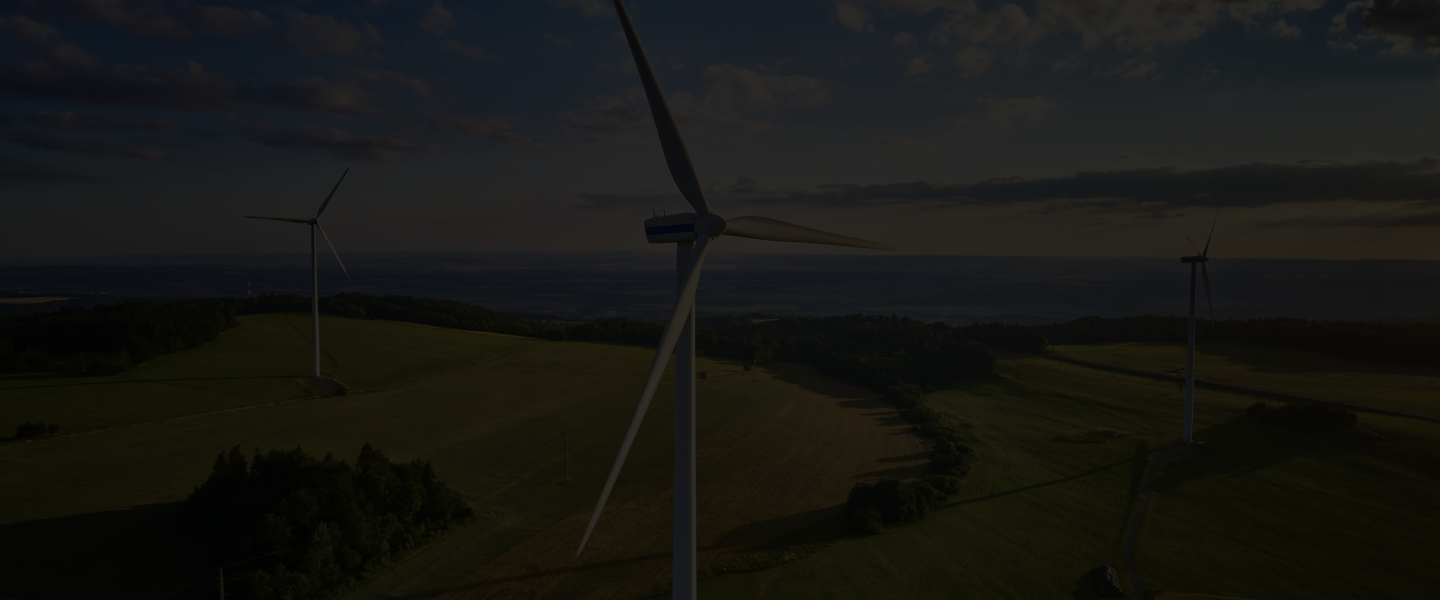
Wind farms generate clean electricity without burning fossil fuels, directly offsetting carbon emissions and supporting large-scale decarbonisation.
Yes. These farms generate large volumes of electricity that can supply industrial facilities, commercial complexes, and residential communities.
Solar farms usually achieve higher efficiency due to scale, optimised land use, and advanced technology, while rooftop solar maximises existing building space.
Regular inspections, cleaning, and performance monitoring are essential. These ensure optimal output, safety, and long-term reliability of the systems.
It depends on size and location. For example, a 1 MW solar farm can generate enough energy to power 1,000-1,200 households annually.
Yes. Offshore wind farms harness stronger, more consistent winds at sea, producing large amounts of clean energy that significantly reduce emissions.
Absolutely. Battery Energy Storage Systems (BESS) can store excess energy from both sources, ensuring a round-the-clock supply and grid stability.
They cut carbon emissions, reduce dependence on fossil fuels, and often support land or water conservation while providing sustainable energy.
Output varies by capacity and wind resources. For instance, a 1 MW wind turbine can power over 1,500 homes annually under optimal conditions.
A carbon footprint is the total amount of greenhouse gases, mainly carbon dioxide, released into the atmosphere by an activity, product, or organization.
Carbon emissions are primarily caused by burning fossil fuels for electricity, transportation, heating, and industrial processes.
Businesses can cut emissions by adopting renewable energy, improving energy efficiency, switching to clean transport, and investing in carbon offset initiatives.
It’s measured by calculating greenhouse gas emissions from activities across Scope 1 (direct), Scope 2 (purchased energy), and Scope 3 (supply chain) categories.
Excess carbon dioxide traps heat in the atmosphere, leading to global warming and driving long-term climate change.
Transport powered by fossil fuels emits high carbon levels, while electric vehicles, public transit, and shared mobility can significantly lower emissions.
Carbon reduction lowers emissions at the source, while offsetting compensates for unavoidable emissions by funding external climate-positive projects.
Buildings consume energy for lighting, heating, cooling, and appliances, often powered by fossil fuels, making them major contributors to emissions.
They provide clean electricity that replaces fossil fuel use, lowering emissions while supporting local economies and sustainable growth.
Energy storage systems capture excess renewable power for later use, reducing reliance on fossil fuels and ensuring round-the-clock clean energy.
4th Floor, The International, 16 Maharshi Karve Road, New Marines Lines, Cross Road No. 1, Churchgate, Mumbai - 400 020
Maharashtra, India
.svg)
.svg)
.svg)
.svg)
.svg)
.svg)
.svg)

