

featured BLOG
CleanMax, Toyota Tsusho to Develop 300 MW of Renewable Energy Projects
Clean energy blogs and whitepapers for businesses ready to lead the transition to a sustainable future.

BLOGS & WHITE PAPERS
Blog
Tech cos sign long-term deals to secure supplies; RE capacity requirement pegged at 32.4 GW
Google, Amazon, Meta and Apple have emerged as major corporate buyers of renewable power in India, as their data centre expansion pushes up demand for clean electricity. Renewable capacity required to serve India's data centres could increase to 32.4 GW by 2030 from 16.1 GW this year, according to Anand Rathi Research's latest report.
The sharp increase is being driven by the rapid growth of data centres and artificial intelligence (AI). India's data-centre IT load is estimated to increase to 5.4 GW by 2030 from 2.7 GW in 2026. Meeting this demand could necessitate about 4 GW of additional round-the-clock clean power.
This is creating a new market for renewable energy developers. Instead of relying solely on state distribution companies, large technology companies are increasingly looking to secure power directly through long-term contracts. Hyperscalers are seeking 15-20 year power purchase agreements (PPAs). This gives renewable developers a more predictable revenue stream and allows them to build projects against long-term corporate demand.
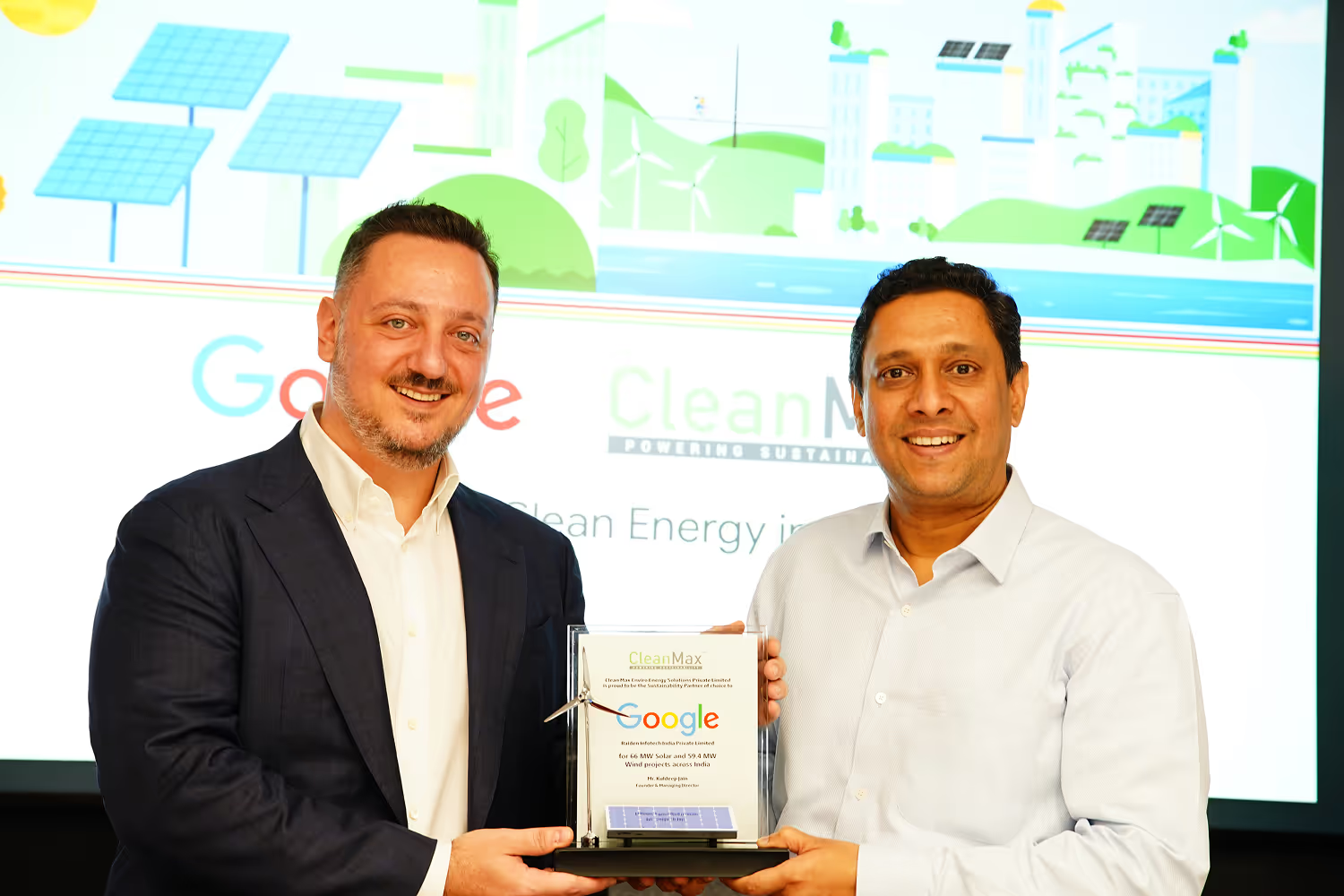
Meta has contracted nearly 1 GW of new renewable energy in India, including 837 MW of solar and wind projects with Clean Max Enviro Energy Solutions (CleanMax), and another 88 MW with Fourth Partner Energy. It has also tied up with Reliance Industries for a 168 MW AI-enabled data centre in Jamnagar, Gujarat. Amazon has signed wind PPAs in India totalling 199 MW with CleanMax and BluPine Energy, while its India renewable portfolio includes 50 wind and solar projects. Google has signed a long-term agreement supporting a 150 MW solar project in Rajasthan, having previously backed 186 MW of wind and solar capacity in India.
Mumbai-based CleanMax is among the companies benefiting from this shift. Data and AI already account for about 42 percent of its contracted renewable power sales capacity, while the company has secured more than 35 percent of hyperscaler deals signed in India, according to the research.
The economics are attractive for both sides. Corporate consumers can negotiate renewable power directly with developers, while group-captive and open-access structures can lower their electricity costs compared with conventional grid supply.
The growth of virtual PPAs and energy attribute purchase agreements is further expanding the market. These structures allow global companies to secure renewable energy attributes and meet carbon reduction targets even when physical power delivery is not directly linked to their facilities. Hyperscalers offer developers stable, long-term contracts, while tech companies increasingly view renewable energy as essential to managing increasing data centre power costs.
Source: Economic Times
Blog
Highlights
Major technology companies like Google, Amazon, Meta, and Apple are increasingly purchasing renewable energy in India. Their expanding data centers are significantly driving the demand for clean electricity. Research predicts that renewable capacity for data centers could grow to 32.4 GW by 2030. These companies are pursuing long-term power purchase agreements to secure renewable energy directly from developers.
New Delhi: Google, Amazon, Meta and Apple have emerged as major corporate buyers of renewable power in India, as their data centre expansion pushes up demand for clean electricity. Renewable capacity required to serve India's data centres could increase to 32.4 GW by 2030 from 16.1 GW this year, according to Anand Rathi Research's latest report.
The sharp increase is being driven by the rapid growth of data centres and artificial intelligence (AI). India's data-centre IT load is estimated to increase to 5.4 GW by 2030 from 2.7 GW in 2026. Meeting this demand could necessitate about 4 GW of additional round-the-clock clean power.
This is creating a new market for renewable energy developers. Instead of relying solely on state distribution companies, large technology companies are increasingly looking to secure power directly through long-term contracts. Hyperscalers are seeking 15-20 year power purchase agreements (PPAs). This gives renewable developers a more predictable revenue stream and allows them to build projects against long-term corporate demand.
Meta has contracted nearly 1 GW of new renewable energy in India, including 837 MW of solar and wind projects with Clean Max Enviro Energy Solutions (CleanMax), and another 88 MW with Fourth Partner Energy. It has also tied up with Reliance Industries for a 168 MW AI-enabled data centre in Jamnagar, Gujarat. Amazon has signed wind PPAs in India totalling 199 MW with CleanMax and BluPine Energy, while its India renewable portfolio includes 50 wind and solar projects. Google has signed a long-term agreement supporting a 150 MW solar project in Rajasthan, having previously backed 186 MW of wind and solar capacity in India.
Mumbai-based CleanMax is among the companies benefiting from this shift. Data and AI already account for about 42% of its contracted renewable power sales capacity, while the company has secured more than 35% of hyperscaler deals signed in India, according to the research.
The economics are attractive for both sides. Corporate consumers can negotiate renewable power directly with developers, while group-captive and open-access structures can lower their electricity costs compared with conventional grid supply.
The growth of virtual PPAs and energy attribute purchase agreements is further expanding the market. These structures allow global companies to secure renewable energy attributes and meet carbon reduction targets even when physical power delivery is not directly linked to their facilities. Hyperscalers offer developers stable, long-term contracts, while tech companies increasingly view renewable energy as essential to managing increasing data centre power costs.
Blog
Beyond software and algorithms, AI’s rise relies on a critical backbone: data centres, power grids, advanced cooling, connectivity networks, and skilled talent. India enters this AI race from a position of considerable strength — as a top digital economy and massive prospective markets for AI adoption. Yet it still accounts for a modest share of global data centre capacity. Closing this gap can transform India into a globally trusted destination for AI compute, serving both domestic and international demand.
Investment is already accelerating. Between 2019 and 2025, India attracted approximately $94 billion in investment commitments for data centres, including over $56 billion in 2025 alone. Installed capacity has more than tripled since 2019, reaching the 1.9 GW mark in 2026, with a development pipeline expected to add around 4.5 GW over the next five years. The challenge now is to ensure that this expansion supports India’s AI ambitions without placing unsustainable pressure on electricity, water and other resources.
Meeting the challenge
Industry is stepping up to meet that challenge. Earlier this year, the Asia-Pacific Data Centre Association (APDCA) launched the Sustainable Digital Infrastructure Accord (SDIA) — the region’s first industry-led framework establishing voluntary sustainability commitments across energy efficiency, clean energy adoption, responsible water management and circular economy practices. For India, the SDIA offers a practical regional reference point as policymakers consider how to align data centre growth, AI ambition and sustainability outcomes across diverse State-level operating environments.
In fact, sustainability will increasingly be the differentiating factor and in this the industry’s contribution is noteworthy. Data centres are becoming anchor customers for new solar and wind projects, providing the long-term demand certainty needed to support investment. STT GDC India’s partnership with CleanMax has grown to more than 130 MW of hybrid renewable-energy capacity across Tamil Nadu and Maharashtra, bringing the renewable energy to approximately 70 per cent of STT GDC India’s total energy mix.
Other operators are pursuing similar approaches. Equinix has commissioned a captive solar project with CleanMax in Maharashtra, helping Equinix match 100 per cent renewable energy coverage for customer deployments in Mumbai. Princeton Digital Group has secured approximately 65 MW of renewable-energy capacity in India and is working with Tata Power Renewable Energy to match electricity consumption at its Mumbai campus with renewable generation on an hourly basis.
Innovation is equally transforming efficiency. NTT’s Navi Mumbai campus became India’s first production facility to deploy liquid immersion and direct-contact liquid cooling technologies, improving energy efficiency by as much as 30 per cent. STT GDC India has meanwhile improved Water Usage Effectiveness by 56 per cent since FY2021 through measures including recycled water use, wastewater treatment and air-cooled chillers in water-scarce locations. Equinix implements water-optimised cooling systems and air-cooled chillers to minimise stress on local water supplies.
This build-out is also creating wider economic opportunities: India’s data centre expansion is projected to generate close to one lakh skilled engineering and technical jobs by 2030, spanning areas such as cloud operations, advanced cooling, energy optimisation, power systems and critical-facilities management.
These developments demonstrate what is possible, but scaling them will require an equally forward-looking policy framework. Data centre operators can bring direct experience from building and operating critical digital infrastructure — from deployment challenges to energy sourcing and sustainability best practices — to help co-design workable policy measures that address real-world challenges.
Clean power
The single biggest requirement is reliable, affordable and scalable access to clean power. AI-ready data centres require round-the-clock low-carbon electricity at predictable prices over long horizons. Yet operators continue to navigate a fragmented landscape of varying state-level open access regulations, banking restrictions, approval delays and uncertain charges that complicate renewable energy procurement.
Greater consistency across these frameworks, alongside coordinated grid planning, long-term regulatory certainty and time-bound approvals, would make it easier for operators to enter into long-term clean-energy arrangements – unlocking investment in both renewable generation and digital infrastructure to support India’s wider energy transition goals.
This is where the importance of structured industry-government dialogue cannot be overstated and initiatives such as the SDIA enable operators to share practical experience from across Asia-Pacific on what enables investment, what creates avoidable friction, and how sustainability goals can be translated into workable implementation pathways.
International experience also offers useful lessons. South Korea’s Special Act on the Promotion of the AI Data Center Industry recognises qualifying AI data centres as strategic national infrastructure, provides single-window approvals and incorporates measures to secure reliable power supply. India need not replicate another country’s model, but it can certainly adapt such best practices to its own federal context.
India possesses the market scale, engineering talent, entrepreneurial energy and policy ambition to become a leading destination for sustainable AI infrastructure. The opportunity before us is therefore much larger than constructing more data centres.
It is to demonstrate that rapid AI-led growth and environmental stewardship are not competing objectives but mutually reinforcing pillars of national competitiveness.
Because the AI race is, in reality, a race for sustainable compute.
Ramachandran is President, Broadband India Forum, and Adaggra is APDCA Board member and President, APAC,
Source: Business Line
Blog

India’s commercial and industrial (C&I) renewable energy market is emerging as one of the most compelling stories in India’s energy transition, yet it remains underappreciated in mainstream policy and investment discourse. As corporates face rising grid tariffs, increasing ESG scrutiny, and export‑linked decarbonisation pressures, buying clean power is no longer a branding exercise; it is a core competitiveness strategy.
Unlike utility-scale projects selling to state distribution companies, where developers endure payment delays, tariff uncertainty and contract renegotiations, the C&I segment offers stronger counterparties and clearer economics. Creditworthy manufacturers, data centres, IT campuses and logistics players are willing to sign long‑tenor power purchase agreements to lock in cheaper, green electricity. This improves cash flows for renewable producers, lowers the cost of capital and enables more sophisticated products such as round‑the‑clock renewable supply and storage‑backed contracts.
Policy is slowly catching up with this shift. Open access reforms, green energy open access rules and state‑level facilitation for group captive and rooftop projects are legitimising the idea that large consumers can actively choose their electricity, rather than just passively receive it. As renewable technologies continue to deflate in cost, the arbitrage between conventional grid tariffs and bespoke renewable supply to C&I customers will only widen.
Over the coming decade, this market will likely define the most profitable growth pool for independent power producers who are agile, customer‑centric and willing to build solutions rather than just assets. India’s clean‑energy future will not be negotiated only in government bidding rooms; it will be contracted, one corporate PPA at a time.
Further, a powerful new layer is now being added: global tech majors are increasingly using India as a clean‑energy sourcing hub to offset emissions across their worldwide operations. Cloud, AI and data‑centre investments by firms are clustering in Indian metros, with hyperscale campuses being paired with large renewable and storage contracts. AI‑driven data centres alone could consume an additional 40–50 TWh of power annually in India by 2030, making round‑the‑clock green power a strategic necessity.
If India becomes the epicentre of global clean compute, C&I‑focused renewable platforms will sit in the slipstream of this demand, compounding EBITDA and value creation far beyond what DISCOM‑tied models can offer.
Author : Akshai Raja, VP & Head of Business Development (West India), CleanMax
.png)

.jpg)
Report
Introduction
The regulatory environment for renewable energy in India is undergoing a paradigm shift with the introduction of the Green Energy Open Access Rules. These rules aim to democratize access to green power, lowering the eligibility limit for consumers. This white paper dissects the policy framework, analyzing the implications for smaller C&I consumers and the challenges regarding cross-subsidy surcharges and grid availability.
Democratizing Access: Lowering the 1 MW Threshold
Previously, only large industries with a connected load of over 1 MW could purchase power via Open Access.
- New Thresholds: Recent policies propose lowering this limit to 100 kW. This opens the market to small and medium enterprises (SMEs), allowing them to procure green power and reduce costs.
- Timely Approvals: The rules mandate a unified portal for time-bound approvals (typically 15 days). This addresses a major bottleneck where DISCOMs previously delayed permissions to prevent high-paying consumers from leaving the grid.
- Metering and Settlement: The shift requires upgrading metering infrastructure to smart meters capable of 15-minute time-block recording for accurate deviation settlement.
The Challenge of Surcharges and Landed Cost
While the policy encourages open access, the financial viability depends on "landed cost."
- Cross-Subsidy Surcharge (CSS): This is a charge levied on open access consumers to subsidize agricultural and residential users. The volatility of CSS is a major risk factor for investors.
- Additional Surcharge (AS): Levied to recover the fixed cost of stranded power assets of the DISCOM. The Green Energy rules attempt to cap or limit these surcharges for green power, but state-level implementation varies.
- Green Attributes: The policy clarifies that the "Green Attributes" (Carbon Credits/RECs) remain with the consumer, which is vital for multinational companies reporting under global sustainability frameworks like CDP or RE100.
Report
Introduction
The solar module landscape is evolving rapidly. The industry standard has shifted from Polycrystalline to Monocrystalline PERC (Passivated Emitter and Rear Cell), and now towards Bifacial and TOPCon technologies. For developers and investors, selecting the right technology is a trade-off between higher upfront CAPEX and higher specific yield (kWh/kWp). This white paper provides a comparative technical analysis of these technologies to aid in procurement decisions.
Technical Superiority of Bifacial Modules
Bifacial modules generate power from both the front and the rear side, capturing light reflected off the ground (albedo).
- Albedo Gain: Depending on the ground surface (white gravel vs. grass), bifacial modules can provide a 5% to 20% gain in generation compared to monofacial modules.
- Durability: Most bifacial modules use a "glass-glass" structure, which offers better protection against micro-cracking and moisture ingress compared to the traditional glass-backsheet structure.
- LCOE Impact: Although bifacial modules have a higher cost per watt, the increased generation density often results in a lower LCOE, making them the preferred choice for large-scale utility projects.
Emerging Technologies: TOPCon and HJT
The roadmap beyond PERC is already visible.
- Tunnel Oxide Passivated Contact (TOPCon): This technology builds on the existing PERC manufacturing lines but offers higher efficiency limits. It minimizes surface recombination losses, pushing cell efficiency toward 25%.
- Heterojunction (HJT): HJT combines crystalline silicon with amorphous silicon thin films. It offers the lowest temperature coefficient in the industry, meaning it performs significantly better in hot climates compared to PERC or TOPCon.
- Degradation Rates: Both TOPCon and HJT offer lower first-year degradation (<1%) compared to PERC (2%), preserving value over the long term.
Report
Introduction
The bankability of renewable energy projects hinges on robust financial modeling that accurately assesses risk and return. With razor-thin margins in competitive bidding, a minor error in assumptions can turn a profitable project into a non-performing asset (NPA). This paper guides CFOs and investors through the critical inputs of a renewable financial model, including sensitivity analysis for interest rates, currency fluctuation, and generation curtailment.
Key Inputs: LCOE and Debt Service Coverage Ratio
Two metrics define the health of a project.
- Levelized Cost of Energy (LCOE): This is the net present value of the unit-cost of electricity over the lifetime of the asset. It must be competitive against grid parity. Models must account for degradation (0.5% - 0.7% annually) and inflation in O&M costs.
- DSCR (Debt Service Coverage Ratio): Lenders require a DSCR typically above 1.2x. The model must stress-test this ratio against "P90" generation scenarios (a conservative estimate where generation is met 90% of the time) rather than the optimistic "P50."
- Depreciation Benefits: In many jurisdictions, accelerated depreciation allows for significant tax deferrals in the early years, drastically improving the project's Internal Rate of Return (IRR).
Risk Sensitivity and Mitigation Strategies
Financial models must be dynamic, not static.
- Interest Rate Risk: With renewable projects being capital intensive, floating interest rates pose a major threat. Hedging strategies or fixed-rate refinancing options must be built into the long-term model.
- Currency Hedging: For projects importing modules or foreign debt, currency depreciation can erode returns. The cost of hedging instruments must be factored into the LCOE.
- Counterparty Risk: The model must assess the creditworthiness of the off-taker (power purchaser). Payment delays from state DISCOMs require working capital buffers to be built into the financial structure.
Report
Introduction
A solar power plant is designed for a 25-year operational life, but actual performance often deviates from theoretical models due to degradation and environmental factors. Effective Asset Management goes beyond simple cleaning; it involves data-driven interventions to preserve asset value. This white paper discusses the methodologies for Life Cycle Assessment (LCA) and the transition from reactive to predictive maintenance strategies using AI and IoT.
Degradation Mechanisms and PID Mitigation
Understanding why panels fail is key to prevention.
- Potential Induced Degradation (PID): This phenomenon causes massive power loss due to voltage leakage between the solar cells and the frame. Advanced inverters now include anti-PID kits that reverse this polarization at night, restoring module health.
- LID and LeTID: Light Induced Degradation (LID) occurs in the first few hours of exposure. Accounting for this in financial models is crucial to avoid revenue shocks in Year 1.
- Thermography: Drone-based thermal imaging is now the standard for detecting micro-cracks and hotspots that are invisible to the naked eye but can cause string fires if left unchecked.
The Role of Digital Twins in O&M
The future of O&M is digital.
- Real-time Benchmarking: "Digital Twin" technology creates a virtual replica of the solar plant. By comparing real-time data against the digital twin's theoretical output (adjusted for live weather), operators can identify underperformance instantly.
- Predictive Analytics: Machine learning algorithms analyze historical data to predict inverter failures or cable insulation breakdowns before they occur, allowing for Just-In-Time (JIT) replacement of parts.
- Spare Parts Strategy: Strategic inventory management based on failure rate data ensures that Mean Time To Repair (MTTR) is minimized, protecting the plant's availability guarantee.
Report
Introduction
While renewable energy costs have plummeted, the intermittent nature of solar and wind remains a barrier to 100% renewable adoption for industries operating 24/7. Battery Energy Storage Systems (BESS) are the technological bridge required to achieve "firm" renewable power. This paper evaluates the current maturity of Lithium-Ion and Flow Battery technologies and analyzes the economic viability of BESS for peak shaving and diesel replacement in the commercial sector.
Technological Maturity and Chemistry Selection
Choosing the right storage technology depends on the application.
- Lithium-Iron-Phosphate (LFP): Currently the industry standard for short-duration storage (1-4 hours) due to its high cycle life, safety profile, and decreasing cost curve. It is ideal for diurnal shifting (moving noon solar power to evening peak).
- Flow Batteries: For longer-duration storage (6+ hours), Vanadium Redox Flow Batteries offer promise due to their non-degrading capacity over decades, though initial costs remain higher.
- Thermal Runaway Mitigation: Safety protocols, including containerized solutions with integrated fire suppression and HVAC systems, are critical for on-site BESS deployment.
The Economics of Peak Shaving and DG Sync
The financial case for BESS is strengthening through multiple value streams.
- Peak Shaving: Many industrial tariffs include high demand charges during peak hours. BESS can discharge during these times, flattening the demand curve and significantly reducing fixed demand charges.
- Diesel Abatement: In regions with unreliable grid power, industries rely on expensive Diesel Generators (DG). Hybrid inverters can synchronize PV + Storage with the DG, minimizing diesel consumption and reducing the levelized cost of backup power.
- Arbitrage: Storing low-cost grid power (or free solar power) and using it when grid tariffs are highest creates a direct arbitrage profit.
Report
Introduction
Deploying solar photovoltaics on industrial rooftops presents unique engineering challenges compared to ground-mounted systems. The interaction between the static solar structure and the dynamic industrial building—subject to vibrations, chemical fumes, and thermal expansion—requires rigorous planning. This white paper outlines the structural and safety standards necessary to ensure that rooftop solar installations do not compromise the integrity of the host building or the safety of its occupants.
Structural Load Analysis and Aerodynamics
Before module installation, a comprehensive structural audit is mandatory.
- Dead Load vs. Live Load: The roof must support not just the weight of the panels (dead load) but also the live loads of maintenance personnel and potential wind uplift.
- Wind Tunnel Testing: For high-rise or coastal facilities, computational fluid dynamics (CFD) modeling helps determine the wind pressure coefficients. This ensures the mounting structure is designed to withstand local wind speeds (often 150+ km/h) without detaching.
- Penetrating vs. Non-Penetrating: utilizing non-penetrating clamps (like seam clamps) for metal roofs is critical to prevent water leakage and corrosion over the 25-year asset life.
Fire Safety and Electrical Protection Standards
Industrial rooftops are high-risk environments.
- DC Arc Fault Protection: High-voltage DC cables run across the roof. Advanced inverters with Arc Fault Circuit Interrupter (AFCI) technology are essential to detect and stop arcs before they cause fires.
- Walkways and Lifelines: A dedicated walkway system isolates foot traffic from the fragile roofing sheets. Permanent lifelines must be installed to ensure the safety of O&M teams working at heights.
- Rapid Shutdown: In the event of a fire in the building, the solar system must have a rapid shutdown mechanism to de-energize the DC conductors, allowing firefighters to operate safely.
Report
Introduction
For Commercial and Industrial (C&I) consumers, procuring renewable energy is no longer just a CSR initiative; it is a strategic hedge against energy inflation. The mechanism of the Power Purchase Agreement (PPA) has evolved to offer businesses long-term price visibility. This paper analyzes the shift from short-term open access procurement to long-term Group Captive and Third-Party PPAs, examining how these structures mitigate financial risk while accelerating Scope 2 emission reductions.
Analyzing the OPEX Model vs. CAPEX Ownership
Corporates must decide between capital investment (CAPEX) and operational expenditure (OPEX).
- Capital Allocation: The OPEX model (Resco) allows companies to preserve capital for core business expansion while still accessing green power at rates lower than grid tariffs.
- Performance Risk Transfer: In an OPEX PPA, the performance risk sits with the developer. The off-taker pays only for the units generated, insulating the business from technology failures or degradation issues.
- Regulatory Lock-in: Long-term PPAs (typically 15-25 years) provide a hedge against regulatory volatility in grid tariffs and fuel surcharges, offering a fixed or predictable escalation operational cost.
Navigating Regulatory Compliance and Open Access
The success of a Corporate PPA depends heavily on the regulatory framework of the specific state or region.
- Group Captive Structures: This model requires the consumer to hold a minimum of 26% equity in the project. It is increasingly popular as it often exempts the consumer from Cross-Subsidy Surcharges (CSS), maximizing savings.
- Banking and Settlement: Understanding "banking" provisions—the ability to store excess power with the grid and withdraw it later—is critical for maximizing the replacement of brown power with green power.
- Future-Proofing: Contracts must now account for changing regulations regarding Renewable Purchase Obligations (RPO) and Energy Storage Obligations (ESO).
Report
Introduction
The global energy transition is moving beyond simple capacity addition to solving the "intermittency challenge." As renewable penetration increases, grid operators face stability issues due to the variable nature of standalone wind and solar. This white paper explores how Wind-Solar Hybrid systems provide a technical solution by flattening the generation curve. By co-locating assets, these systems offer a higher Plant Load Factor (PLF) and better grid compliance, effectively bridging the gap between variable renewable energy and baseload power requirements.
Complementary Generation Profiles and Grid Synchronization
The core advantage of hybrid systems lies in the anti-correlated generation profiles of wind and solar resources.
- Diurnal Load Balancing: Solar generation peaks during mid-day (11 AM – 3 PM), while wind generation typically accelerates in the late evening and night. This natural hand-off reduces the need for steep ramping of thermal power plants.
- Grid Infrastructure Optimization: In standalone systems, transmission lines often run at 20-30% capacity. Hybridization boosts utilization to over 50%, reducing the per-unit transmission cost and alleviating grid congestion.
- Voltage Stability: Advanced hybrid inverters can provide reactive power support, helping maintain grid voltage levels even during generation fluctuations.
The Economic Case: Reducing Levelized Cost of Energy (LCOE)
Hybridization is not just a technical fix; it is an economic imperative.
- Shared CAPEX: Co-location reduces capital expenditure by sharing land, evacuation infrastructure, and substations. This creates a tangible reduction in the Levelized Cost of Energy (LCOE).
- Reduced Deviation Penalties: In markets with strict forecasting and scheduling regulations (like DSM in India), the combined consistent output of hybrid farms significantly lowers the risk of penalties for under-injection or over-injection of power.
- Improved ROI: The stability of generation makes hybrid projects more bankable, attracting lower interest rates from lenders compared to higher-risk standalone wind projects.
Blog
Introduction
The solar boom has led to a crowded market of installers and EPC contractors. For a business owner, distinguishing between a fly-by-night operator and a long-term partner is difficult but critical. A solar plant is a 25-year commitment; choosing the wrong developer can lead to roof damage, safety hazards, and poor generation. Here is how to filter the best from the rest.
Verify End-to-End Capabilities and Safety
The best developers control the entire value chain. Avoid those who subcontract critical engineering or installation tasks.
- In-House Expertise: Look for a team that handles design, procurement, liaisoning (government approvals), and installation internally.
- Safety Record: Ask for their EHS (Environment, Health, Safety) manual. A reputable developer will have strict protocols for working at heights and handling high-voltage equipment.
- Quality Components: Ensure they have direct relationships with Tier-1 module and inverter manufacturers to guarantee genuine product warranties.
Check Financial Stability and Client References
Since the developer will likely be handling the Operation and Maintenance (O&M) for years to come, their financial health matters.
- Balance Sheet: A developer with a strong balance sheet is unlikely to go bankrupt and leave your system unsupported.
- Client Feedback: Ask for references from clients in your specific industry. Did the developer meet the deadline? Is the generation matching the proposal?
- Portfolio: A diverse portfolio of commissioned projects is the strongest indicator of competence and reliability.
Blog
Introduction
Despite the widespread adoption of solar energy, myths and misconceptions persist. These fallacies often deter business owners and homeowners from making a switch that could save them substantial money. It is time to debunk the "fake news" surrounding solar technology with hard facts and engineering realities.
Myth: Solar Panels Don't Work in Cloudy Weather
Fact: Solar panels utilize daylight, not just direct sunlight, to generate electricity.
- Diffuse Light: While production is lower on a cloudy day compared to a sunny one, the panels continue to generate power using diffuse light.
- Temperature Factor: Interestingly, solar panels are less efficient in extreme heat. A cool, cloudy day can sometimes offer decent voltage levels due to lower operating temperatures.
- Annual Averages: A professional proposal calculates expected generation based on historical weather data, including cloudy days, so your financial projections remain accurate.
Myth: Solar is Too Expensive and Maintenance is High
Fact: The economics of solar have changed strictly over the last decade.
- Plummeting Costs: The cost of solar modules has dropped by nearly 90% in the last 10 years, making it cheaper than grid power in most states.
- No Moving Parts: Solar systems have no moving parts, meaning there is very little wear and tear.
- Simple Maintenance: The primary "maintenance" required is cleaning dust off the panels, which can be automated or outsourced cheaply. The system is designed to be "fit and forget."
Blog
Introduction
We are thrilled to announce that CleanMax has been honored with the National Excellence Awards by the Ministry of New and Renewable Energy (MNRE). This accolade recognizes our position as the "Leading Rooftop Solar Developer" and "Leading Rooftop Solar EPC Provider." Being recognized by the country's nodal agency for renewable energy is not just a win for us, but a validation of the trust our corporate clients place in our capabilities.
A Testament to Quality and Scale
The MNRE awards are the benchmark for success in the Indian renewable sector, evaluating companies on installed capacity, execution speed, and quality standards.
- Execution Excellence: This award highlights our ability to deliver complex projects across diverse geographies, from automotive factories to textile hubs.
- Market Leadership: It reinforces our status as the preferred partner for corporate India, managing one of the largest rooftop portfolios in the country.
- Reliability: It serves as a guarantee to our partners that we deliver on our promises of generation yield and project timelines.
Commitment to Safety and Innovation
Beyond the numbers, this award recognizes our uncompromising approach to safety and technology.
- Safety First: We adhere to global EHS (Environment, Health, Safety) standards, ensuring that every project is accident-free.
- Tech-Driven: Our adoption of remote monitoring and advanced data analytics ensures our clients get maximum performance from their assets.
- Future Ready: This recognition fuels our ambition to contribute even more aggressively to India's target of 500 GW of non-fossil capacity by 2030, pushing the boundaries of what is possible in the rooftop solar space.
Blog
Introduction
The waiting game is over. Solar energy is no longer a "future technology"—it is the most cost-effective power source available today. With grid tariffs rising annually and the climate crisis intensifying, the cost of inaction is becoming higher than the cost of adoption. Harnessing the power of the sun now allows businesses to lock in low energy costs and future-proof their operations against economic volatility.
Economic Resilience and Cost Control
Electricity is a major overhead for most businesses. Relying solely on the grid exposes you to unpredictable tariff hikes, fuel surcharges, and peak-demand penalties.
- Fixed Costs: Solar allows you to levelize your energy costs for the next two decades.
- Immediate Cash Flow: If you opt for an OPEX model (Power Purchase Agreement), you save money from day one without spending a single rupee upfront.
- Asset Value: A solar-equipped building has a higher property value and is more attractive to eco-conscious tenants.
Corporate Responsibility and Brand Value
Sustainability is a currency in the modern market. Consumers, investors, and B2B partners are increasingly favoring companies with green credentials.
- CSR Goals: Solar installation is a tangible, visible commitment to the environment that contributes directly to Corporate Social Responsibility targets.
- Supply Chain Compliance: Many global brands now require their suppliers to be green; adopting solar ensures you remain a preferred vendor.
- Marketing Edge: "Powered by Green Energy" is a powerful message that resonates with the modern, environmentally aware consumer.
Blog
Introduction
Despite the clear economic benefits, switching to solar is a significant operational change that naturally invites questions. Business owners often hesitate due to concerns about disruption, financial risks, or technical reliability. Clearing these doubts is the first step toward energy independence. Here, we address the most critical queries that decision-makers raise during the evaluation phase.
What is the Real Return on Investment (ROI)?
Financials are usually the primary concern. For Commercial and Industrial (C&I) clients, solar is less of an expense and more of an investment.
- Payback Period: Typically 3 to 4 years for a CAPEX project.
- Life of Asset: Solar plants last 25+ years, meaning you get 20+ years of virtually free electricity.
- Savings: Businesses can expect to reduce their electricity bills by 30% to 60%, depending on the available roof area and sanctioned load.
- Tax Benefits: accelerated depreciation benefits often sweeten the deal further in the first few years.
Will Installation Affect My Business Operations?
A common myth is that solar installation turns the facility into a chaotic construction zone. In reality, modern solar EPC (Engineering, Procurement, Construction) is non-intrusive.
- Roof-Based Work: 90% of the activity happens on the roof, away from the shop floor or office.
- Planned Interconnections: The final hook-up to the main electrical panel is scheduled during weekends or off-hours to ensure zero downtime.
- Safety Protocols: Professional developers use dedicated external access for materials, ensuring your daily logistics remain undisturbed.
Blog
Introduction
Installing a rooftop solar plant is one of the highest ROI decisions a business can make, turning idle real estate into a revenue-generating asset. However, a roof is a critical part of your building's infrastructure, and modifying it requires due diligence. Before rushing into an installation, it is crucial to assess the physical and technical readiness of your facility to ensure safety and maximum generation efficiency.
Structural Analysis and Shadow Mapping
Not every roof is solar-ready. A detailed structural stability report is non-negotiable to ensure the roof can bear the dead load of the modules and the dynamic load of wind speeds.
- Shadow Analysis: Identifying nearby obstructions (trees, tall buildings, vents) is vital. Even a small shadow can disproportionately drop the system's efficiency.
- Walkways and Safety: The design must include designated walkways for cleaning and maintenance staff to prevent damage to the sheets or accidents.
- Orientation: South-facing installation (in the Northern Hemisphere) is standard, but site-specific constraints may require engineering adjustments.
Selecting the Right Technology and Warranty
The market is flooded with various module technologies, from Polycrystalline to Mono-PERC and Bifacial. Choosing Tier-1 equipment ensures longevity. Pay close attention to the warranty terms:
- Performance Warranty: Typically 25 years, guaranteeing the panels will still produce roughly 80% of their original power.
- Product Warranty: Covers manufacturing defects, usually ranging from 10 to 12 years.
- Inverter Quality: The inverter is the brain of the system; ensure it has a proven track record for handling the specific grid voltage fluctuations in your area.
Blog
Introduction
The global energy landscape is shifting from "green energy" to "reliable green energy." While solar and wind are powerful individually, their intermittent nature has been a barrier for industries requiring continuous power. Wind-Solar Hybrid Farms solve this puzzle. By co-locating these assets, we can harness solar power during the day and wind power—which often peaks in the evening or night—to create a near-constant supply of clean electricity. This is the definitive step toward a net-zero future.
Optimizing Infrastructure and Land Use
One of the most significant advantages of hybrid farms is the efficient use of resources. In a standalone project, the transmission infrastructure often sits idle when the sun isn't shining or the wind isn't blowing.
- Shared Transmission: Hybrid systems utilize the same grid connection for both sources, drastically improving transmission utilization.
- Land Efficiency: Solar panels can be installed in the spacing between wind turbines, maximizing energy generation per acre of land.
- Cost Reduction: Shared civil works and substations lower the overall capital expenditure.
Accelerating Decarbonization for Heavy Industries
For energy-intensive sectors like steel, cement, and data centers, standalone renewables often cover only 30-40% of energy needs. Hybrid farms, however, can boost this renewable penetration to over 60-70% due to their complementary generation profiles. This allows corporations to significantly reduce their Scope 2 emissions and meet sustainability targets (like RE100) much faster than previously thought possible. It transforms renewable energy from a supplementary source into a primary baseload replacement.
Blog
Introduction
As industries transition towards Round-The-Clock (RTC) green energy, Wind-Solar Hybrid projects have become the gold standard for reliability. However, the complexity of integrating two distinct renewable sources requires a developer with specialized skills. Unlike standalone solar, hybrid projects involve complex grid synchronization and resource modeling. Choosing the right partner is not just about the lowest price; it is about ensuring the technical viability and long-term performance of a 25-year asset.
Assessing Technical Capabilities and Track Record
The first step in selection is verifying that the developer has specific experience with hybrid systems, not just standalone solar or wind. Hybrid farms require sophisticated engineering to optimize the "Plant Load Factor" (PLF).
Grid Integration: Ask how they manage the simultaneous injection of power from wind and solar sources.
Resource Assessment: Ensure they use advanced meteorological data to predict wind and solar patterns accurately.
Portfolio: A developer with commissioned hybrid projects is always a safer bet than one experimenting with their first.
Evaluating O&M and Financial Flexibility
A hybrid plant is only as good as its maintenance. The developer must offer robust Operation and Maintenance (O&M) services, utilizing predictive analytics to minimize downtime for both turbines and panels. Additionally, look for financial strength. Top-tier developers offer flexible models like the OPEX (Resco) model—where they invest the capital and you pay a fixed tariff—or the CAPEX model for ownership. A financially stable partner ensures the project won't stall due to funding issues and guarantees the sanctity of long-term Power Purchase Agreements (PPAs).



.svg)
.svg)
.svg)
.svg)
.svg)
.svg)
.svg)

